



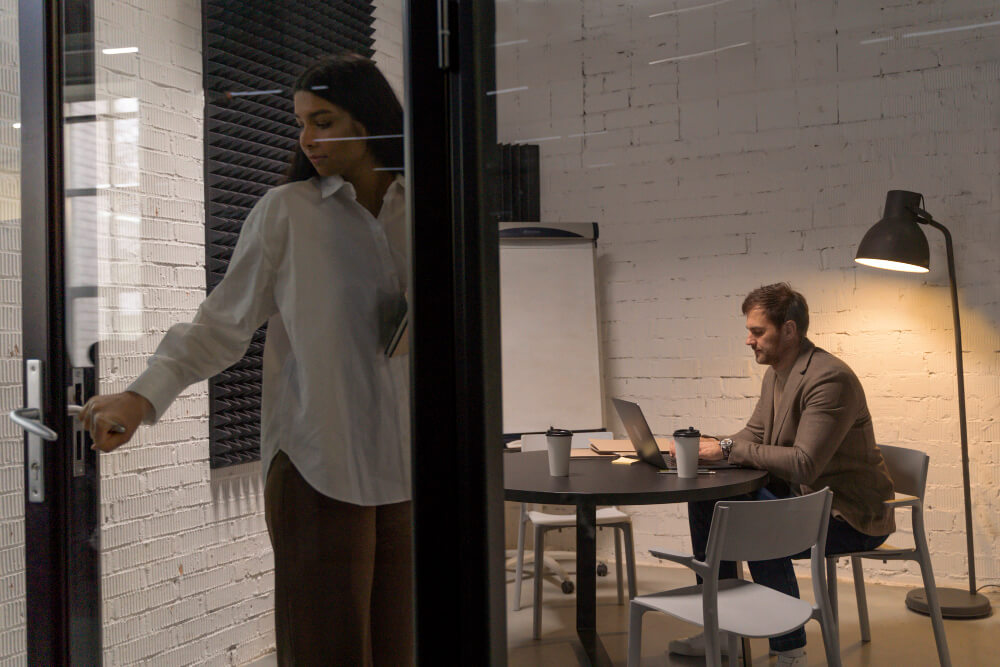
Modern commercial environments are evolving rapidly as organizations rethink how physical space influences productivity, collaboration, and employee satisfaction. Traditional office layouts are no longer sufficient for the dynamic nature of today’s work culture, where flexibility and adaptability are becoming essential design principles.
Workspaces are now expected to support multiple functions simultaneously, from focused individual work to collaborative group sessions and hybrid communication setups. This shift has placed greater emphasis on how physical environments can be structured to accommodate different behavioral needs throughout the day.
The Changing Role Of Physical Workspaces
In earlier workplace models, office design was primarily static. Employees were assigned fixed desks, meeting rooms were limited, and spatial flexibility was minimal. However, modern organizations are increasingly prioritizing environments that can adapt to changing work patterns.
This transformation is driven by several factors, including hybrid work models, increased emphasis on employee well-being, and the need for more efficient space utilization. As a result, commercial interior design is now closely linked to organizational performance metrics.
Space is no longer just a physical container for work. It is an active component in shaping how people think, interact, and perform tasks.
Productivity And Environmental Structure
Research in workplace psychology suggests that environmental structure has a direct impact on cognitive performance. Factors such as noise levels, visual distractions, and spatial density can significantly influence focus and efficiency.
Employees working in open environments often experience both benefits and challenges. While collaboration may increase, so too can interruptions and cognitive overload. This has led to a growing demand for balanced environments that allow for both interaction and concentration.
The goal is not to eliminate openness, but to introduce structure within open layouts that supports different types of work behavior.
Privacy, Focus, And Cognitive Load
One of the most important aspects of modern workspace design is privacy management. Privacy in this context does not necessarily mean isolation, but rather control over sensory input.
When employees are constantly exposed to visual and auditory stimuli, cognitive load increases, which can reduce overall productivity over time. Providing flexible zones for focused work helps mitigate this issue.
Design solutions that allow spaces to be reconfigured based on task requirements have become increasingly relevant in commercial architecture and office planning.
Flexible Design As A Business Strategy
Flexibility in workspace design is not only an aesthetic choice but also a strategic business decision. Organizations that invest in adaptable environments often benefit from improved employee satisfaction, better space utilization, and increased operational efficiency.
Flexible environments allow businesses to scale and adjust layouts without requiring complete structural redesigns. This adaptability is especially valuable in industries where team structures and workflows change frequently.
Businesses evaluating workspace options can explore solutions such as coworking spaces, serviced offices, and private office environments depending on their operational needs. Companies comparing flexible office setups can explore New York workspaces here or look into similar options such as shared workspaces, managed offices, and hybrid workplace solutions that support different team structures and working styles.
In many commercial projects, modular systems such as One Point Partitions are used to create adaptable layouts that balance privacy, accessibility, and visual continuity within shared spaces.
The Role Of Environmental Psychology In Office Layouts
Environmental psychology plays a key role in understanding how people interact with physical spaces. Factors such as lighting, spatial boundaries, and visual openness all influence behavioral outcomes in workplace settings.
Studies show that employees tend to perform better in environments that offer a sense of control over their immediate surroundings. This includes the ability to reduce distractions, adjust privacy levels, and navigate spaces efficiently.
As a result, commercial design is increasingly focused on creating environments that respond to human behavior rather than forcing behavior to adapt to static structures.
Collaboration Versus Individual Focus
One of the ongoing challenges in workspace design is balancing collaboration with individual focus. Open office layouts encourage communication and teamwork, but they can also reduce concentration if not properly structured.
The most effective modern offices often combine open collaborative zones with semi-private or private areas designed for focused tasks. This hybrid approach allows employees to transition between different modes of work depending on their needs throughout the day.
Spatial Flow And Employee Experience
Beyond productivity, spatial design also influences employee experience. The way individuals move through a workspace, access resources, and interact with colleagues contributes to their overall perception of the work environment.
Efficient spatial flow reduces friction and improves usability, which can indirectly support morale and job satisfaction. Poorly designed layouts, on the other hand, can create confusion, inefficiency, and frustration.
Conclusion
Modern commercial spaces are no longer static environments but dynamic systems that must support a wide range of human behaviors. Productivity, privacy, collaboration, and adaptability all play essential roles in shaping effective workplace design.
By applying principles from environmental psychology and flexible design strategy, organizations can create spaces that enhance both performance and user experience. As workplaces continue to evolve, adaptable solutions such as integrated partition systems will remain central to how commercial environments are structured and optimized.