



Quick Answer
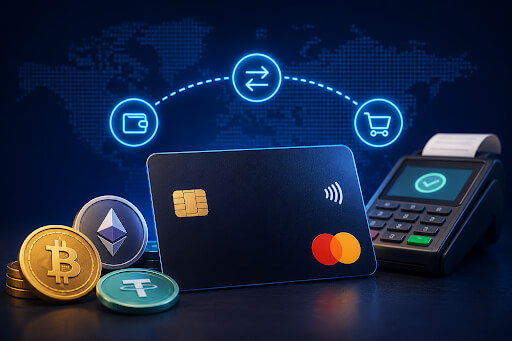
Crypto cards are payment cards that let you spend cryptocurrencies like Bitcoin, Ethereum, or USDT anywhere Visa or Mastercard is accepted. Most work by automatically converting your crypto into local fiat at the time of purchase, making them one of the simplest ways to use digital assets for everyday payments without manually selling your holdings.
Key Takeaways
- Bridge to TradFi: Crypto cards connect your crypto holdings to traditional payment networks.
- Versatile Frameworks: Most crypto cards today are Visa or Mastercard debit cards, while credit and prepaid options are also available.
- Instant Conversion: Automatic crypto-to-fiat conversion happens during each transaction, while merchants receive local currency.
- Dynamic Selection: The best crypto card depends on rewards, fees, supported assets, regional availability, and your spending habits.
- Mind the Fine Print: Hidden costs like conversion spreads, ATM fees, and foreign exchange fees can reduce the value of cashback rewards.
- Advanced Yield Integration: Some modern cards, such as the MEXC Card, combine spending rewards with passive yield, offering up to 10% cashback and up to 7% APR on eligible USDT balances, subject to program terms.
The growing adoption of cryptocurrency for everyday payments has changed how investors interact with digital assets. Manually selling crypto before every purchase is inefficient and creates unnecessary friction. Crypto cards solve this problem by bridging blockchain assets and traditional payment infrastructure. This guide covers how they work, their core types, and how to choose the right one.
What Is a Crypto Card?
A crypto card is a payment card linked to your cryptocurrency holdings that automatically converts digital assets into fiat currency whenever you make a purchase. Merchants receive local currency while you spend directly from your crypto balance.
Crypto Card Basics at a Glance
| Metric | Details |
| Primary Uses | Everyday spending, ATM withdrawals, online shopping |
| Payment Networks | Visa or Mastercard |
| Funding Source | Cryptocurrency balances (BTC, ETH, USDT, USDC, etc.) |
| Merchant Receives | Local fiat currency |
| Conversion Mechanism | Automatic real-time swap at the point of sale |
| Most Common Variant | Crypto debit cards |
Traditional bank cards rely entirely on fiat bank deposits. In contrast, crypto cards draw from digital tokens. Because Visa and Mastercard dominate the global network, crypto cards are accepted anywhere these networks are supported, making them increasingly popular among crypto investors and travelers.
How Does a Crypto Card Work?
Crypto cards work by connecting your wallet or exchange account to a payment network. When you make a purchase, the card provider converts the required amount of cryptocurrency into fiat using the current exchange rate before settling the payment with the merchant.
The Three-Step Process
- Fund Your Crypto Balance: You hold digital assets in an exchange account, a dedicated card wallet, or a supported self-custody wallet.
- Pay Like Any Other Bank Card: You swipe, tap, or enter card details online for retail purchases or ATM withdrawals.
- Automatic Crypto Conversion: The network processes the transaction using real-time exchange rates. The provider deducts the crypto balance, converts it instantly, and settles with Visa or Mastercard. The merchant receives fiat, not cryptocurrency.
Types of Crypto Cards Explained
Crypto cards generally fall into three categories: debit cards funded with existing crypto, credit cards that provide a borrowing limit while rewarding users in crypto, and prepaid cards that require users to load funds before spending.
| Feature | Crypto Debit Card | Crypto Credit Card | Crypto Prepaid Card |
| Uses crypto balance | ✓ | ✗ | ✓ |
| Borrow money | ✗ | ✓ | ✗ |
| Monthly repayment | No | Yes | No |
| Crypto rewards | Sometimes | Often | Sometimes |
| Best for | Everyday spending | Frequent card users | Budget management |
- Crypto Debit Cards: These allow you to spend your existing crypto balance directly. No borrowing is involved.
- Crypto Credit Cards: The issuer provides a credit line that is repaid later, similar to a traditional credit card, and often rewards spending with crypto.
- Crypto Prepaid Cards: Users must preload a specific balance onto the card before spending, offering better control over budgets.
Crypto Cards vs Traditional Debit Cards vs Crypto Wallets
Although crypto cards look like regular bank cards, they are funded with digital assets instead of bank deposits. Unlike standalone crypto wallets, they enable seamless real-world spending through existing payment networks.
| Feature | Crypto Card | Bank Debit Card | Crypto Wallet |
| Funding source | Cryptocurrency | Bank account | Cryptocurrency |
| Everyday spending | Yes | Yes | Limited |
| Automatic conversion | Yes | N/A | Usually No |
| Merchant acceptance | Visa/Mastercard | Visa/Mastercard | Merchant-dependent |
| Cashback | Often | Sometimes | No |
Custodial vs Non-Custodial Crypto Cards
Most crypto cards are custodial, meaning the provider temporarily holds your assets before conversion. Non-custodial cards allow users to retain control of private keys but remain less common.
The custodial model prioritizes convenience and speed, integrating deeply with exchange accounts. The self-custody model favors user asset ownership but may involve higher on-chain network fees. Security considerations differ, so users must decide whether convenience or true asset ownership suits them best.
Why More People Are Using Crypto Cards
Crypto cards simplify everyday spending while allowing users to continue holding digital assets. They provide global Visa or Mastercard acceptance, contactless payments via Apple Pay or Google Pay, and better integration with crypto exchanges for convenient international spending.
| Myth | Fact |
| Merchants receive Bitcoin directly. | Merchants typically receive local fiat currency. |
| You must manually sell crypto before buying things. | The crypto-to-fiat conversion is automatic at checkout. |
| Every single crypto card is a credit card. | Most exchange-issued options are debit cards. |
Industry Note: Cashback programs commonly range from approximately 1% to 10%, depending on the issuer, eligibility requirements, and reward structure.
Common Fees and Risks to Understand Before Applying
Cashback alone does not determine a crypto card’s value. Comparing fees and limitations is essential because hidden costs can significantly reduce overall returns. Users must also weigh cryptocurrency price volatility and local tax considerations.
Fee Checklist
- Exchange or crypto conversion spread
- Foreign exchange (FX) markup
- Cashback exclusions on specific categories
- ATM withdrawal limits and fees
- Monthly or annual card fees

How to Choose the Right Crypto Card
The best crypto card depends on how you spend, which cryptocurrencies you hold, and where you live, not simply which card advertises the highest cashback percentage. Verify whether your preferred cryptocurrency (BTC, ETH, USDT, etc.) is supported for spending, since supported assets differ between providers.
- If Cashback Is Your Priority: Compare reward percentages, monthly caps, reward currencies, and tier requirements.
- If You Travel Frequently: Look for low FX fees, international ATM support, and broad global network acceptance.
- If You Mainly Hold Stablecoins: Prioritize deep USDT support, simple stablecoin funding, and yield opportunities.
- If Security Is Most Important: Review the custody model, two-factor authentication, spending controls, and fraud protection.
Quick Decision Checklist
- Supported cryptocurrencies
- Cashback program and tiers
- Fees and FX markups
- Card network (Visa vs. Mastercard)
- Country availability and KYC requirements
- Mobile app usability and spending limits
Real-World Example: How the MEXC Card Works
The MEXC Card is a Visa crypto debit card that demonstrates how modern crypto cards can combine everyday spending with rewards and passive income. Instead of requiring users to convert crypto manually, it allows eligible users to spend USDT directly while earning cashback and interest on qualifying balances.
Key Features & Mechanics
- How It Works: The card is linked to an MEXC account and funded directly with USDT. It performs automatic USDT-to-fiat conversion at checkout and is accepted anywhere Visa is supported, including via Google Pay.
- Rewards Structure: It acts as a standard Visa Debit card where you spend USDT directly. It offers up to 10% cashback in USDT (determined by your M-Score tier) and up to 7% APR on eligible USDT balances, subject to program limits and terms.
- Best For: This setup is optimal for stablecoin holders, frequent crypto traders, international shoppers, and users seeking both spending rewards and passive yield.
Crypto Card Comparison Checklist
Before applying, compare multiple cards side by side rather than focusing only on headline cashback percentages.
| Factor | Why It Matters |
| Card type | Debit, credit, or prepaid framework |
| Supported cryptocurrencies | Determines what assets you can spend without manual trades |
| Cashback & Conditions | Overall reward value vs. staking or loyalty tier requirements |
| Fees & APR | Total ownership cost weighed against passive yield on balances |
| Network & Geography | Visa/Mastercard acceptance, ATM terms, and local country availability |
| Security & App | Asset protection, 2FA, and daily mobile usability |
Conclusion
Crypto cards have become one of the easiest ways to bridge cryptocurrency and everyday spending. Understanding how cards work, their fee structures, and reward programs helps users make better long-term decisions. Rather than choosing solely based on the highest advertised cashback, compare overall value, including fees, supported assets, security, and additional benefits—to find the card that best fits your financial habits.
Frequently Asked Questions
What fees should I compare before choosing a crypto card?
Look at conversion spreads, foreign exchange fees, ATM withdrawal fees, monthly or annual card fees, inactivity fees, and any cashback restrictions.
Are crypto cards safe?
Most reputable providers use KYC verification, encryption, two-factor authentication, and Visa or Mastercard security standards, though users should also consider whether a card is custodial or non-custodial.
What should I look for when choosing the best crypto card?
Compare supported cryptocurrencies, rewards, fee structure, regional availability, security features, spending limits, and whether the card offers additional benefits such as travel perks or passive yield on eligible balances.