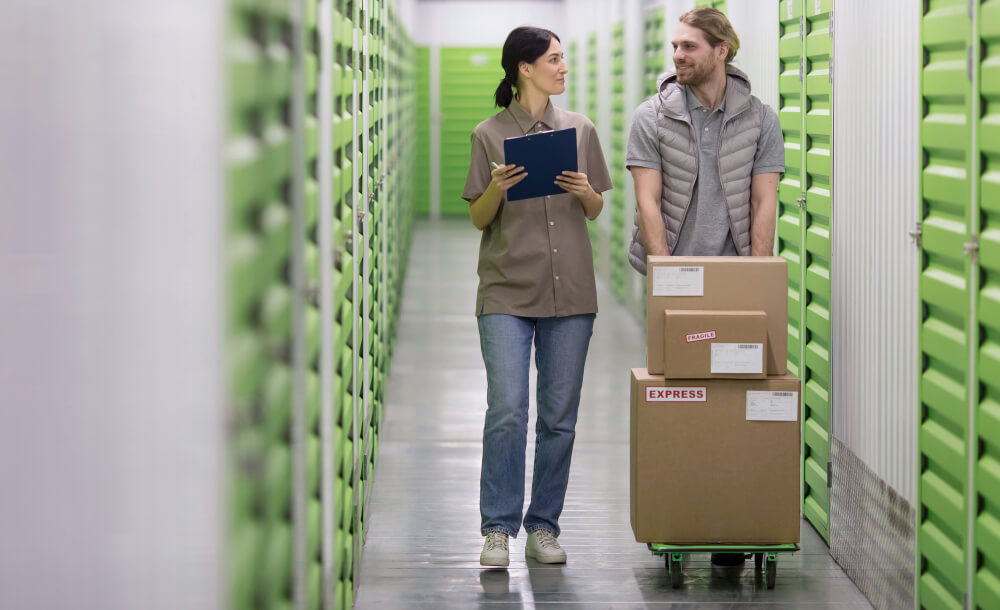




Growth is a good problem to have, but it still creates pressure. As businesses expand, delivery volumes often rise quickly. More customers, employees, suppliers, locations, and online orders can all lead to a steady increase in the number of parcels arriving each day.
At first, teams may handle deliveries manually. A staff member signs for a package, writes down a name, sends a message, and places the item on a shelf. That process can work when volumes are low. But as deliveries increase, manual handling can become slow, inconsistent, and difficult to track.
This is why growing businesses need a more structured approach to parcel management. With efficient parcel management software, teams can manage rising delivery volumes with better visibility, faster notifications, and fewer manual steps.
Delivery volume is not just a logistics issue. It affects staff time, storage space, customer service, and operational control.
Why Delivery Volumes Increase as Businesses Grow
Delivery activity usually grows in several ways at once. A larger team may receive more equipment, supplies, documents, and personal deliveries. Sales growth may create more customer orders, returns, samples, or replacement shipments. More vendors can mean more inbound parcels, while new locations create more delivery points to manage.
| Growth Factor | Delivery Impact |
| More employees | More internal and personal deliveries |
| More customers | More orders, returns, and service shipments |
| More suppliers | More inbound parcels and documents |
| More locations | Harder visibility across delivery points |
| More inventory movement | Greater need for tracking and accountability |
| More hybrid work | More equipment shipments and delayed pickups |
Without a clear process, delivery handling can quickly become reactive. Staff may spend time searching for packages, answering repeated questions, or trying to resolve disputes with limited information.
Manual Processes Become Risky at Scale
Many businesses start with simple tools such as paper logs, spreadsheets, email chains, or shared notes. These methods are familiar and inexpensive, but they are not built for high delivery volumes.
A handwritten log may be hard to search. A spreadsheet may not be updated in real time. An email notification may be missed. A package may be moved to another storage area without changing the record.
As volumes increase, these small gaps become bigger problems.
| Manual Process Issue | Business Risk |
| Inconsistent records | Harder to locate parcels quickly |
| Delayed notifications | Parcels remain uncollected for longer |
| No clear storage location | Staff waste time searching |
| No proof of collection | Disputes are harder to resolve |
| Limited reporting | Managers cannot see delivery trends |
The result is more friction for staff and recipients. Packages may be misplaced, collection times may slow down, and teams may lose confidence in the process.
Create a Standard Delivery Workflow
The first step in handling higher delivery volumes is to create a standard workflow. Every parcel should follow the same basic journey from arrival to collection.
A reliable workflow includes receiving, logging, storing, notifying, releasing, and reporting. When these steps are consistent, the staff know exactly what to do, and the recipients know what to expect.
| Workflow Stage | What Should Happen |
| Receive | Parcel is accepted and checked |
| Log | Key details are recorded |
| Store | The item is placed in a clear location |
| Notify | Recipient receives collection information |
| Release | Collection is confirmed |
| Report | Data is reviewed for improvement |
A standard workflow reduces dependency on individual memory. It also makes training easier when new staff join or when multiple people handle deliveries across shifts.
Growing businesses need delivery processes that work even when the busiest staff member is not available.
Improve Intake at the Point of Arrival
Efficient delivery handling begins when the parcel first enters the business. If information is missed at intake, every later step becomes harder.
Staff should capture key details such as recipient name, courier, tracking number, arrival time, package condition, and storage location. In higher-volume environments, scanning labels or using digital records can speed up intake and improve accuracy.
A strong intake process helps answer common questions quickly:
| Question | Why It Matters |
| Who is the parcel for? | Ensures the right recipient is notified |
| When did it arrive? | Confirms delivery timing |
| Which courier delivered it? | Helps with follow-up if needed |
| Where is it stored? | Speeds up collection |
| Has it been collected? | Supports accountability |
The goal is to create a searchable record that staff can trust.
Automate Recipient Notifications
One of the most time-consuming parts of delivery handling is communication. Staff may need to email recipients, make calls, send messages, or answer questions throughout the day.
Automated notifications help reduce this workload. Once a parcel is logged, the recipient can receive an alert with pickup instructions. If an item remains uncollected, reminders can help move it out of storage.
This is especially useful for businesses with limited front-desk, mailroom, or facilities staff. Instead of manually chasing every recipient, teams can focus on exceptions and higher-priority tasks.
Faster notifications also reduce storage pressure. The sooner people know a package has arrived, the sooner they can collect it.
Organize Storage Before It Becomes Overwhelming
Storage is often overlooked until it becomes a problem. As delivery volumes rise, parcels can quickly take over reception desks, mailrooms, cupboards, corridors, or warehouse corners.
A well-organized storage system makes packages easier to find and safer to hold. Businesses can use shelves, bins, lockers, cages, labeled zones, or dedicated package rooms, depending on volume and available space.
| Storage Method | Best For |
| Labelled shelves | Offices and mailrooms |
| Lockable cabinets | Sensitive or high-value items |
| Package lockers | High-volume shared spaces |
| Oversized zones | Large or irregular parcels |
| Department-based areas | Businesses with multiple teams |
Storage should be clear, accessible to authorized staff, and easy to update. Random placement leads to wasted time and a higher risk of lost parcels.
Capture Proof of Collection
As delivery volumes increase, proof of collection becomes more important. Without a clear handover record, disputes can be difficult to resolve.
A recipient may say they never received a parcel. A courier may confirm delivery to the building, but not to the final recipient. Staff may remember handing over an item, but memory alone is not reliable.
Proof of collection can include:
| Proof Type | Benefit |
| Signature | Confirms recipient handover |
| Timestamp | Shows when the collection happened |
| Staff confirmation | Records who released the parcel |
| Photo evidence | Supports condition or placement records |
| Recipient ID check | Reduces incorrect handovers |
This is especially important for IT equipment, legal documents, medical items, financial records, replacement parts, and other high-value deliveries.
Use Parcel Data to Plan Resources
A growing business should not manage delivery volume by guesswork. Parcel data can help managers understand workload patterns and make better decisions.
Useful metrics include daily parcel volume, peak delivery times, average collection time, uncollected parcels, courier frequency, and issue reports.
| Metric | What It Helps With |
| Daily parcel volume | Workload planning |
| Peak delivery windows | Staff scheduling |
| Average pickup time | Recipient communication |
| Uncollected items | Storage planning |
| Courier patterns | Delivery coordination |
| Exception reports | Process improvement |
For example, if most deliveries arrive between 10 a.m. and 1 p.m., managers can schedule coverage during that window. If parcels remain uncollected for several days, reminder policies may need improvement.
Standardize Across Multiple Locations
Growing businesses often expand into multiple offices, warehouses, branches, campuses, or shared workspaces. This can create inconsistent delivery processes.
One location may use a spreadsheet. Another may rely on paper logs. A third may handle notifications manually. These differences make it harder to compare performance and maintain service quality.
Standardizing parcel workflows helps every location follow the same core process. Local teams may still adapt based on space and staffing, but the main steps should remain consistent.
This creates better reporting, easier training, and a more reliable experience for employees, customers, and suppliers.
Make Delivery Management Part of Growth Planning
Many businesses plan for growth by investing in sales, hiring, finance, customer service, and technology. Delivery management is often addressed only after problems appear.
That is a mistake.
As delivery volumes rise, weak parcel processes can create real operational drag. Staff lose time, storage areas become crowded, recipients become frustrated, and managers lack visibility.
Improving delivery handling early helps businesses scale with fewer disruptions. It gives teams a repeatable process, reduces manual work, improves accountability, and creates data that supports better decisions.
A Smarter Way to Handle More Deliveries
Growing delivery volume does not have to mean growing confusion. With the right process, businesses can handle more parcels without overwhelming staff or sacrificing accuracy.
The key is to move away from informal handling and build a structured workflow around receiving, logging, storing, notifying, releasing, and reporting. This creates a smoother experience for everyone involved.
As businesses grow, delivery management becomes more than an admin task. It becomes part of operational efficiency. Companies that manage parcels well can reduce friction, protect valuable items, improve service, and keep daily operations moving with confidence.