




Many of us work hard to build our wealth. Yet, a surprising number overlook a crucial step: securing that wealth for the future. In fact, two out of three adults in the United States have no established estate plan. Without careful preparation, our hard-earned assets might not go where we intend. They could also be diminished by taxes or unforeseen challenges.
As of July 2026, significant changes to federal estate tax exemptions are on the horizon. This means the urgency to plan has never been greater. We must consider how to protect our legacy and ensure our loved ones are cared for.
This comprehensive guide will explore the essential connection between wealth management, tax law, and estate planning. We will show how these areas intertwine to minimize tax burdens and safeguard your assets. Navigating these complex financial and legal landscapes requires foresight and expert guidance. This is especially true when considering potential tax implications or the need for expert assistance with tax matters.
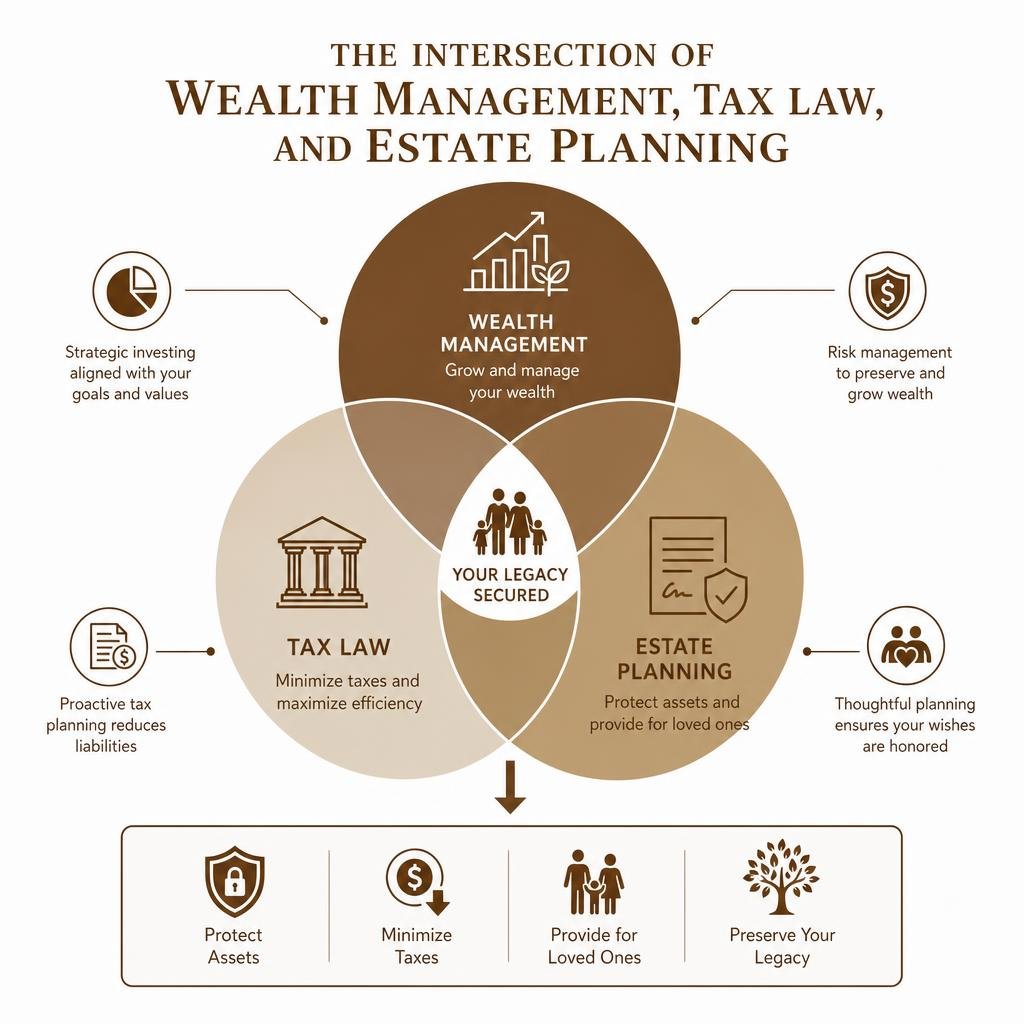
Effective financial stewardship involves more than just accumulating assets; it demands a strategic approach to both growing and protecting them. This is where the powerful synergy between wealth management and estate planning comes into play. While often discussed separately, these two disciplines are intrinsically linked, forming a unified framework for enduring financial security and legacy preservation.
Defining Wealth Management vs. Estate Planning
At its core, wealth management focuses on the accumulation, growth, and preservation of assets during an individual’s lifetime. It encompasses a broad spectrum of financial services, including investment management, retirement planning, tax strategies, risk control through insurance, and even philanthropic advisory. The primary goal is to optimize asset growth, manage liabilities, and ensure financial security to meet both short-term needs and long-term aspirations. A skilled wealth manager helps clients navigate market fluctuations, leverage tax-efficient investment vehicles, and adapt their financial strategy to evolving life circumstances.
Estate planning, on the other hand, is primarily concerned with the efficient transfer of wealth and assets after death, as well as managing affairs in the event of incapacity. It defines how assets will be owned, distributed, and taxed. Key components typically include wills, various types of trusts, powers of attorney for financial matters, and advance healthcare directives. The objectives of estate planning are to ensure that an individual’s wishes are carried out, minimize estate and inheritance taxes, avoid the often lengthy and public probate process, and provide for dependents or specific beneficiaries.
While wealth management builds the financial house, estate planning designs the blueprint for its future transfer and protection. One without the other leaves significant vulnerabilities.
How Coordinated Wealth and Estate Planning Protects Assets
When wealth management and estate planning are integrated, they create a robust, unified framework that optimizes asset growth while simultaneously preparing for their efficient and protected transfer. This coordinated approach ensures that investment strategies align with legacy goals, and that estate documents reflect current asset holdings and tax laws.
Consider the role of asset titling and beneficiary designations. In wealth management, decisions about how assets are owned (e.g., individually, jointly, or within a trust) have profound implications for estate planning. For instance, assets held in joint tenancy with right of survivorship pass directly to the surviving owner, bypassing probate. Similarly, beneficiary designations on retirement accounts, life insurance policies, and annuities dictate who receives these assets, often superseding instructions in a will. A coordinated strategy ensures these designations are aligned with overall estate objectives, preventing unintended distributions or costly legal challenges.
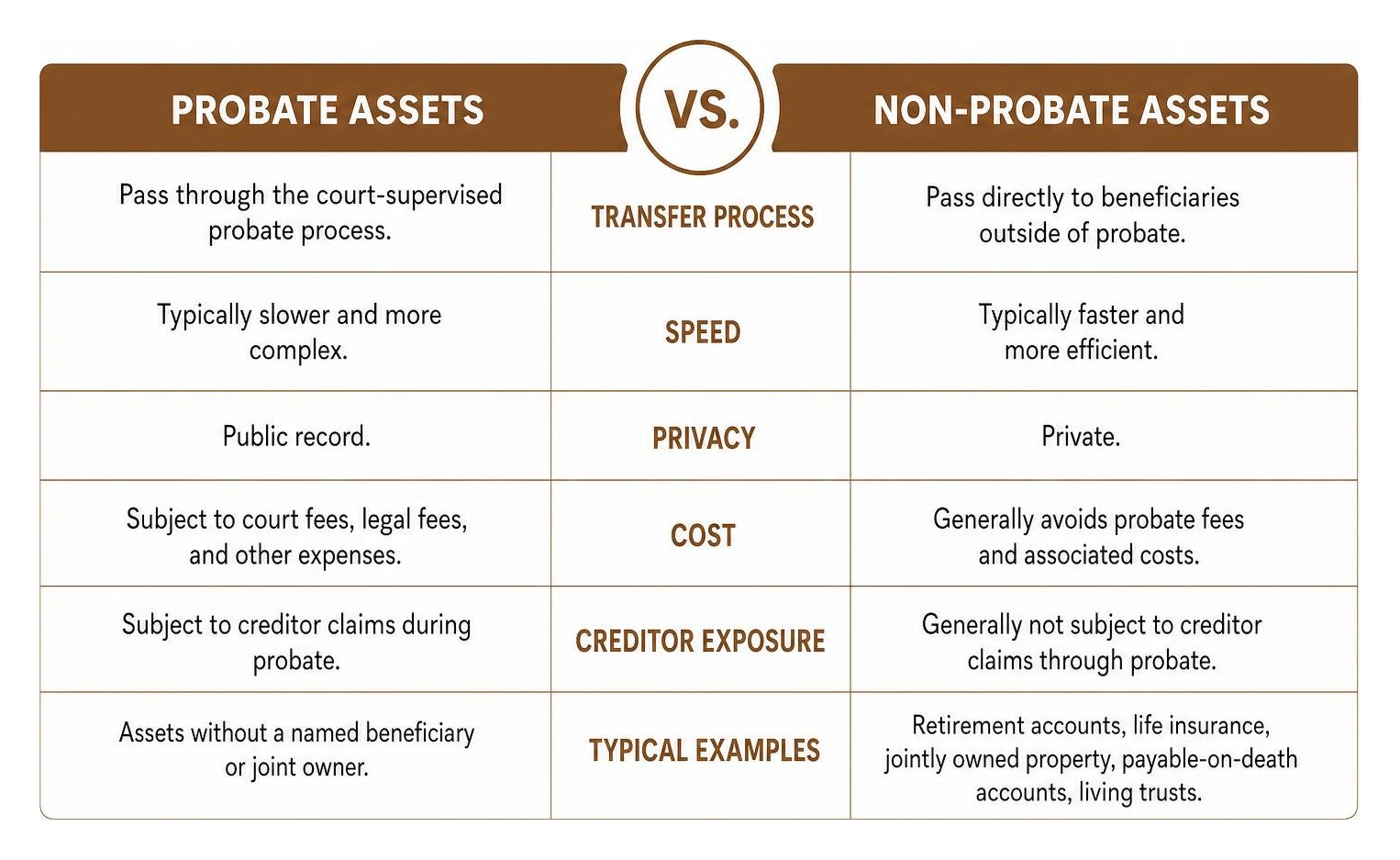
This integrated approach offers several benefits:
- Optimized Asset Growth and Protection: Wealth management strategies are designed to grow assets, while estate planning ensures these assets are protected from unnecessary taxes, legal challenges, and probate costs upon transfer.
- Efficient Wealth Transfer: By aligning investment portfolios with estate planning vehicles like trusts, we can facilitate a smoother, more private, and often more tax-efficient transfer of wealth to heirs. For individuals seeking to build and transfer their legacy with confidence, Secure wealth and estate planning expertise is paramount. This can involve working with dedicated financial professionals who understand the intricate interplay between asset growth and protection.
- Tax Advantages: Strategic use of gifting, trusts, and other estate planning tools can significantly reduce potential estate and inheritance taxes, preserving more wealth for beneficiaries.
- Continuous Financial Guidance: Life is dynamic, and financial circumstances, family structures, and tax laws change. An integrated approach provides continuous financial guidance, allowing for regular reviews and adjustments to the plan, ensuring it remains relevant and effective.
The scale of modern wealth management and planning is vast. Technology platforms supporting wealth managers collectively oversee trillions in assets, with some prominent platforms alone exceeding $15 trillion in AUM, demonstrating the scale and sophistication of modern wealth management. This technological integration allows advisors to better visualize scenarios, manage documents, and collaborate, ensuring a comprehensive and adaptable plan for their clients.
Key Components of a High-Net-Worth Estate Plan

For high-net-worth individuals, estate planning transcends basic wills. It involves a sophisticated array of legal instruments and strategies designed to minimize taxes, protect assets from creditors, ensure privacy, and facilitate a smooth multi-generational transfer of wealth. A comprehensive plan typically includes foundational documents alongside advanced trust structures.
Foundational Documents for High-Net-Worth Individuals
Even with complex strategies, foundational documents remain critical:
- Revocable Living Trust: This is often the cornerstone for high-net-worth individuals. Assets transferred into a revocable living trust avoid probate, ensuring privacy and continuity of asset management if the grantor becomes incapacitated. It also allows for flexible modifications throughout the grantor’s lifetime.
- Pour-Over Will: This document works in conjunction with a revocable living trust, ensuring that any assets not explicitly titled in the trust at the time of death “pour over” into it, to be distributed according to the trust’s terms.
- Advance Medical Directives (Living Will and Healthcare Power of Attorney): These documents specify medical treatment preferences and designate an agent to make healthcare decisions if an individual is unable to do so. A HIPAA Authorization is often included to grant access to medical information.
- Durable Financial Power of Attorney: This grants a trusted agent the authority to manage financial affairs if the individual becomes incapacitated, preventing the need for court-ordered conservatorship.
- Guardianship Nominations: For individuals with minor children, this designates who will care for them.
- Digital Asset Planning: In our increasingly digital world, planning for digital assets (social media accounts, online financial accounts, cryptocurrencies) is crucial. Specific instructions or designations can ensure these are managed or closed as desired.
- Letter of Instruction: While not legally binding, this informal document provides practical guidance to executors and trustees, detailing wishes for funeral arrangements, location of important documents, and personal sentiments.
Advanced Trust Structures for Wealth Preservation
Beyond the revocable living trust, high-net-worth individuals often utilize a variety of irrevocable trusts, each serving specific purposes for wealth preservation, tax minimization, and multi-generational legacy planning. These trusts, once established and funded, generally cannot be easily modified or revoked, removing assets from the grantor’s taxable estate.
- Irrevocable Life Insurance Trusts (ILITs): An ILIT is designed to own life insurance policies, removing the death benefit from the insured’s taxable estate. The trust uses its own assets (often gifted by the grantor) to pay premiums. Upon the grantor’s death, the tax-free proceeds can provide liquidity to the estate to pay estate taxes or be distributed to beneficiaries.
- Dynasty Trusts (Generation-Skipping Trusts): These long-term trusts are structured to benefit multiple generations, often for 100 years or more, depending on state law. By skipping generations for estate tax purposes, they can preserve wealth across many descendants without incurring estate taxes at each generational transfer. They typically utilize the Generation-Skipping Transfer (GST) tax exemption.
- Spousal Lifetime Access Trusts (SLATs): A SLAT is an irrevocable trust established by one spouse for the benefit of the other spouse and potentially other family members (like children). The grantor spouse makes gifts to the trust, removing those assets from their taxable estate. The beneficiary spouse can access the trust assets during their lifetime, providing a degree of flexibility while still achieving estate tax reduction.
- Domestic Asset Protection Trusts (DAPTs): Available in certain states, DAPTs are irrevocable trusts designed to shield assets from future creditors and lawsuits. The grantor can be a discretionary beneficiary of the trust, offering a level of asset protection while retaining some potential access to the funds. However, these trusts require careful consideration of state laws and timing.
Navigating the complexities of these advanced trust structures requires specialized knowledge. Professionals focusing on Paul Deloughery wealth and estate planning can provide invaluable guidance, ensuring these sophisticated tools are correctly implemented and aligned with your overall financial objectives. They help tailor solutions that maximize benefits while adhering to legal requirements.
Lifetime Gifting and Strategic Tax Planning
Strategic lifetime gifting is a powerful tool for high-net-worth individuals to reduce the size of their taxable estate and minimize future estate taxes. As of July 2026, we are keenly aware of the impending changes to federal estate tax laws. The federal estate tax exemption, currently $13.61 million per person in 2024, is scheduled to revert to lower levels in 2026, potentially cutting the exemption roughly in half. This creates a critical window of opportunity for substantial wealth transfers.
- Annual Gift Tax Exclusion: This allows individuals to give a certain amount to any number of recipients each year without incurring gift tax or using up their lifetime exemption. In 2024, the annual gift tax exclusion amount was $18,000 per recipient (or $36,000 when gift splitting with a spouse). For 2026, this exclusion is set to increase to $19,000 per person. Consistently utilizing this exclusion over many years can significantly reduce an estate’s value.
- Lifetime Estate Tax Exemption Utilization: For gifts exceeding the annual exclusion, the amount is deducted from the individual’s lifetime gift and estate tax exemption. Given that the federal estate tax exemption is projected to be $15 million per person in 2026 before the scheduled reduction, making large gifts now can “lock in” the higher exemption amount, transferring substantial wealth out of the estate free of federal gift or estate tax.
- Family Limited Partnerships (FLPs) and Limited Liability Companies (LLCs): These entities can be used to transfer ownership of assets (like real estate or business interests) to younger generations while retaining some control. Valuation discounts can often be applied to interests in FLPs or LLCs, allowing for the transfer of more underlying value for a lower gift tax valuation.
- Stepped-Up Basis: Generally, when an asset is inherited, its cost basis is “stepped up” to its fair market value at the date of the decedent’s death. This means heirs can sell appreciated assets with little to no capital gains tax. This is a crucial consideration when deciding whether to gift an appreciated asset during life or allow it to pass through the estate.
Specialized Planning: Businesses, Charity, and Asset Protection
For high-net-worth individuals, especially business owners, estate planning extends beyond personal assets to encompass complex business structures, philanthropic endeavors, and robust asset protection strategies. These specialized areas require meticulous planning to ensure continuity, maximize impact, and safeguard accumulated wealth.
How Should Business Owners Approach Succession Planning?
Business succession planning is a critical, often overlooked, component of a comprehensive estate plan for entrepreneurs and family business owners. It ensures a smooth transition of leadership and ownership, preserving the business’s value and legacy.
- Formal Succession Plan Documents: A clear, written plan outlining who will take over leadership and ownership, and under what terms, is essential. This prevents disputes and provides a roadmap for the future.
- Buy-Sell Agreements: These legally binding contracts predetermine how an owner’s share of a business will be reapportioned upon their death, disability, retirement, or departure. They establish a fair valuation method and ensure a market for the owner’s interest, providing liquidity for their estate.
- Gradual Ownership Transfers: Strategies like Grantor Retained Annuity Trusts (GRATs) can be used to transfer business interests to heirs over time, freezing the current value for gift tax purposes and allowing future appreciation to pass tax-free.
- Management Transition: Beyond ownership, a robust plan addresses the transfer of management responsibilities. This includes identifying and training successors, establishing mentorship programs, and creating contingency plans for unexpected events.
Incorporating Philanthropy into Your Legacy
Charitable giving is not only a way to support causes we care about but also a powerful tool within estate planning to achieve significant tax benefits.
- Donor-Advised Funds (DAFs): These flexible vehicles allow individuals to contribute assets, receive an immediate tax deduction, and then recommend grants to charities over time. DAFs are popular for their simplicity, anonymity, and ability to involve family in philanthropic decisions.
- Charitable Remainder Trusts (CRTs): An individual transfers appreciated assets into a CRT, receiving an immediate income tax deduction and an income stream for a specified term or their lifetime. Upon termination, the remaining assets go to a charity. This allows for diversification of assets without immediate capital gains tax.
- Charitable Lead Trusts (CLTs): The inverse of a CRT, a CLT pays income to a charity for a set period, after which the remaining assets (plus any appreciation) revert to non-charitable beneficiaries (e.g., family members). This can reduce gift or estate taxes on the transfer to family.
- Private Foundations: For those with substantial philanthropic goals, a private foundation offers maximum control over giving strategies and can involve multiple generations in its governance.
Asset Protection Strategies for Wealth Preservation
High-net-worth individuals are often targets for lawsuits and creditors. Proactive asset protection strategies are crucial to shield wealth from unforeseen claims.
- Entity Segregation (LLCs and Trusts): Placing assets, particularly real estate or business interests, into Limited Liability Companies (LLCs) or irrevocable trusts can segregate them from personal liability. For example, placing a vacation property in an LLC can contain liability from potential tenant injuries within that entity.
- Umbrella Liability Insurance: While not a direct estate planning tool, robust umbrella insurance provides an additional layer of protection above standard liability policies, safeguarding personal assets from large claims.
- Strategic Asset Titling: Holding assets as “tenants by the entirety” (available to married couples in some states) can protect them from the individual creditors of one spouse. Homestead exemptions in certain states also protect a primary residence from creditors.
- Periodic Legal Audits: Regularly reviewing asset protection structures with legal counsel ensures they remain effective and compliant with changing laws. It’s vital to implement these strategies proactively; transfers made after a claim arises may be deemed fraudulent.
Preparing Heirs for Wealth Transfer
A significant challenge for many affluent families is preparing the next generation to responsibly manage inherited wealth and preserve a lasting legacy. Without proper preparation, inherited wealth can sometimes become a source of conflict or be mismanaged.
- Family Legacy Planning: This involves articulating family values, establishing a mission statement for the family’s wealth, and fostering a shared understanding of its purpose.
- Investor Education: Providing heirs with foundational investment education, financial literacy skills, and an understanding of fiduciary responsibilities is crucial. This can involve working with financial advisors to create educational programs.
- Beneficiary Preparation: Beyond financial literacy, preparing beneficiaries means involving them in discussions about the estate plan, clarifying their roles (e.g., as trustee or beneficiary), and discussing the intent behind various provisions.
- Incentive Trusts: These trusts can be structured to encourage certain behaviors (e.g., pursuing education, charitable work, or maintaining employment) while discouraging others (e.g., excessive spending or reliance on trust funds).
- Open Communication: Fostering open and honest communication about wealth, its purpose, and the responsibilities that come with it can help prevent family disputes and ensure a smoother transition. This proactive engagement helps ensure that the family’s values and philanthropic goals are understood and continued by future generations.
Maintaining and Updating Your Estate Plan
An estate plan is not a static document; it’s a living framework that requires regular review and updates to remain effective. Life changes, legislative shifts, and evolving financial landscapes all necessitate adjustments to ensure your plan continues to meet your objectives.
When and How Often to Review Your Plan
As a general rule, we recommend reviewing your entire estate plan every three to five years. However, certain major life events or external changes should trigger an immediate review:
- Changes in Marital Status: Marriage, divorce, or remarriage significantly impacts beneficiary designations and asset distribution.
- Birth or Adoption of a Child: This necessitates updating guardianship provisions and beneficiary designations.
- Death of a Spouse or Key Beneficiary: This requires revising distribution plans and potentially appointing new fiduciaries.
- Significant Asset Changes: A substantial increase or decrease in wealth, the acquisition or sale of a business, or major inheritances should prompt a review.
- Relocation to a New State: Estate laws vary significantly by state, and moving can invalidate certain provisions or create new planning opportunities.
- Changes in Tax Laws: As we approach July 2026, the impending changes to federal estate tax exemptions are a prime example of why legislative updates demand immediate attention. Understanding these shifts and their potential impact on your plan is crucial for tax mitigation.
- Changes in Health: A serious illness or diagnosis of incapacity should prompt a review of healthcare directives and powers of attorney.
- Changes in Executor or Trustee Availability: If a designated executor, trustee, or guardian is no longer able or willing to serve, new appointments are necessary.
The Importance of Expert Guidance and Collaboration
Updating an estate plan, especially for high-net-worth individuals, is a complex process that benefits immensely from a collaborative team of professionals:
- Estate Planning Attorney: This is your primary legal guide, responsible for drafting and updating wills, trusts, and other legal documents, ensuring they comply with current laws and reflect your wishes.
- Financial Advisor/Wealth Manager: They provide ongoing oversight of your assets, align investment strategies with your estate goals, and can advise on the financial implications of various planning decisions.
- Certified Public Accountant (CPA) or Tax Advisor: Crucial for understanding the tax implications of your estate plan, identifying tax-saving opportunities, and ensuring compliance with federal and state tax regulations. In cases where tax issues become complex or require scrutiny, seeking Expert federal audit assistance can be invaluable to navigate potential challenges successfully.
- Trust Officer: For complex trusts, a professional trust officer or corporate trustee can manage trust assets, administer distributions, and ensure compliance with fiduciary duties.
This integrated team ensures that all aspects of your financial life—from investments to taxes to legal documents—are coordinated and working harmoniously towards your legacy goals. Regular communication among these professionals is key to maintaining a coherent and effective plan.
Frequently Asked Questions about Wealth and Estate Planning
What is the difference between a will and a revocable living trust?
Both wills and revocable living trusts are estate planning documents that dictate how your assets will be distributed after your death. However, they differ significantly in their functionality and benefits. A will is a legal document that outlines your wishes for asset distribution, names an executor, and appoints guardians for minor children. For a will to be executed, it must typically go through probate, a court-supervised process that can be public, time-consuming, and costly.
A revocable living trust, on the other hand, is a legal entity that holds your assets during your lifetime. You, as the grantor, typically serve as the initial trustee and beneficiary, maintaining full control over your assets. Upon your death, a successor trustee manages and distributes the trust assets according to your instructions, bypassing probate. This offers greater privacy, often speeds up the distribution process, and can be more cost-effective in the long run. Trusts also provide for asset management in the event of your incapacity without court intervention. Many comprehensive estate plans utilize a “pour-over will” in conjunction with a revocable trust to ensure any assets not formally transferred to the trust during life are directed into it at death.
How will the 2026 tax law changes affect my estate plan?
The year 2026 marks a significant turning point for federal estate tax laws. The current historically high federal estate tax exemption, which was $13.61 million per person in 2024, is scheduled to sunset and revert to lower levels. While the exact figure for 2026 is projected to be around $15 million per person before the reduction, the exemption will likely be cut roughly in half thereafter, potentially returning to a range of $7-8 million per person (indexed for inflation from the 2017 exemption of $5.49 million).
This change means that many more estates, particularly those of high-net-worth individuals, could become subject to federal estate tax at a rate of 40% on amounts exceeding the exemption. For those with estates approaching or exceeding these thresholds, proactive planning is crucial. Strategies such as utilizing the current higher lifetime gift tax exemption through significant lifetime gifts, establishing irrevocable trusts (like ILITs or SLATs), and implementing valuation discount strategies with entities like FLPs become even more critical before the end of 2025. It’s imperative to review your plan now to leverage the current favorable exemptions and mitigate future tax liabilities.
How often should I review my wealth and estate planning documents?
While a general guideline suggests reviewing your estate plan every three to five years, the reality is that major life events or significant external changes should prompt an immediate review. A three-to-five-year baseline ensures your plan remains current with minor changes in your life and evolving financial goals.
However, a more frequent review is warranted after events such as marriage, divorce, the birth or adoption of a child, the death of a beneficiary or fiduciary, a substantial change in financial assets (e.g., selling a business, receiving a large inheritance), or a move to a different state. Furthermore, legislative updates, particularly those impacting tax laws, demand immediate attention. Given the impending tax law changes in 2026, for example, anyone with an estate nearing the federal exemption threshold should be consulting with their legal and financial advisors now. Regular professional consultations with your estate planning attorney, financial advisor, and tax advisor are essential to ensure your plan remains robust, compliant, and aligned with your current wishes and objectives.
Conclusion
The journey of wealth creation is a testament to hard work and strategic decision-making. However, the true measure of financial success often lies in our ability to preserve that wealth, ensure its responsible transfer, and leave a lasting legacy for future generations. As we navigate a dynamic landscape of economic shifts, personal milestones, and evolving tax laws, the importance of a comprehensive and integrated approach to wealth management and estate planning cannot be overstated.
By understanding the synergy between growing and protecting assets, leveraging advanced planning tools, and preparing heirs for their roles, we can build a resilient framework for our financial future. Proactive planning, supported by a dedicated team of legal, financial, and tax professionals, offers not just security, but profound peace of mind. It allows us to face the future with confidence, knowing that our legacy will endure and our loved ones will be cared for according to our deepest wishes.