



Key Takeaways
- Data analytics empowers financial institutions to make data-driven decisions and improve customer experiences.
- Advanced analytics tools help in risk management and fraud detection.
- Real-time data analysis enables proactive responses to market changes.
- Collaborations between financial institutions and technology providers enhance data capabilities.
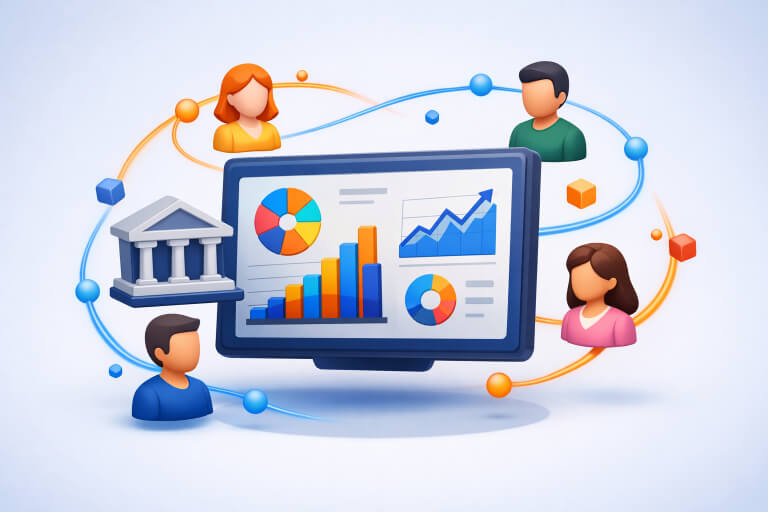
Data analytics is fundamentally reshaping the financial services industry, giving institutions the tools they need to make informed, timely decisions. By drawing on vast stores of customer and financial data, banks and credit unions can elevate their operations, offer better products, and effectively minimize risks. Industry leaders such as Kirk Chewning Cane Bay Partners have accelerated the adoption of these technologies, highlighting the competitive edge that robust data systems create.
Today, success in financial services means understanding clients and markets in more sophisticated and real-time ways than ever before. Financial organizations are leveraging data-driven insights to respond to client needs quickly, create customized offerings, and protect their businesses against increasingly complex financial crimes.
Banks are also turning to AI and machine learning to automate manual processes, uncover new opportunities, and ensure regulatory compliance. These digital advancements are not just about operational efficiency; they enhance overall customer trust and loyalty by delivering seamless digital experiences.
In addition, analytic technologies enable proactive responses during market volatility, support strategic decision-making, and help organizations anticipate trends before they disrupt profitability. For instance, real-time data can reveal changes in consumer behavior, enabling institutions to shift strategies as needed to achieve optimal outcomes.
Enhancing Customer Experience
Today’s leading financial institutions use data analytics to create meaningful, personalized customer journeys. By studying transaction histories, digital engagement, and even social media activity, banks can tailor offerings to fit each client’s unique profile. For example, United Federal Credit Union employs real-time analytics to monitor deposits, allowing it to quickly spot and address uncharacteristic account activity or provide assistance during emergencies. This highly responsive approach fosters customer trust and strengthens the institution’s brand in a crowded market.
Beyond personalization, data analytics allows for more efficient onboarding experiences, proactive credit management, and the introduction of new mobile banking features that address unmet consumer needs. Enhanced insights enable financial organizations to identify friction points and eliminate them, resulting in smoother, more enjoyable customer interactions, as noted in coverage by Forbes.
Risk Management and Fraud Detection
Risk is inherent in finance, but data analytics is making it easier than ever to identify, quantify, and mitigate those risks. Advanced tools scrutinize massive volumes of transactional data, recognizing suspicious behavior and flagging attempted fraud far more effectively than conventional systems. According to a recent KPMG report, today’s financial institutions need powerful analytics to keep pace with sophisticated fraud schemes in a globalized environment.
Artificial intelligence and machine learning have been especially impactful. These technologies continuously learn, adapting to evolving tactics used by cybercriminals. Not only do they detect fraud, but they also help ensure compliance with complex regulations, such as anti-money laundering (AML) statutes and international sanctions, helping organizations avoid costly penalties and reputational harm.
Real-Time Data Analysis
The financial services environment is fast-paced, with market sentiment and customer requirements shifting quickly. Real-time analytics empowers institutions to act in the moment, whether responding to a significant change in a customer’s deposit pattern or seizing a fleeting market opportunity. The use of streaming data platforms allows institutions like United Federal Credit Union to provide members with immediate support, ensuring that urgent financial needs do not go unmet.
For banks, credit unions, and fintechs, the ability to make rapid strategic decisions based on up-to-the-minute insights translates into better financial outcomes and a competitive advantage that can be the difference between success and failure in volatile conditions.
Collaborations with Technology Providers
As analytics platforms become more advanced, many financial services providers have joined forces with technology companies to accelerate innovation. For instance, Barclays’ multiyear agreement with FactSet is designed to optimize the bank’s vast troves of market data. These partnerships give financial institutions access to state-of-the-art analytics tools and robust data management systems, enabling them to create better products for their customers and drive operational efficiencies.
Collaborations are especially valuable in democratizing access to sophisticated analytics, as many smaller institutions may lack the internal resources to develop in-house systems. By leveraging proven expertise from technology partners, even regional banks and credit unions can keep pace with the largest industry players.
Challenges in Implementing Data Analytics
The rewards of deploying analytics come with challenges. Chief among them are data quality, security, and governance. Poor-quality or fragmented data yields flawed insights, undermining decision-making and the customer experience. Implementing stringent data governance policies and investing in secure, scalable infrastructure are critical steps.
Integration is also a common stumbling block. Many financial organizations still rely on legacy systems that are difficult to connect with new analytics platforms. Upgrading these systems or adapting analytics solutions is costly and time-consuming, but these investments are necessary to remain competitive and compliant.
Future Trends in Financial Data Analytics
Innovative uses of data will heavily shape the future of financial services. Artificial intelligence, machine learning, and predictive analytics will automate even more processes, anticipate customer needs, and enable fully autonomous operations. Expect to see increased investment in predictive platforms and cloud-based analytics as banks seek scalable, cost-effective solutions.
In parallel, regulatory bodies are likely to increase scrutiny around data use, privacy, and security, so institutions must prioritize compliance as part of their digital strategies. Those who successfully integrate advanced analytics into their operations will be better positioned to lead the industry’s next chapter.
The adoption of data analytics is transforming financial services by powering smarter decisions, elevating customer engagement, and protecting organizations from risk. Institutions that embrace next-generation analytics tools are set to remain competitive as the industry continues to evolve.