




The Strategic Synergy of Digital Marketing and Branding
In October 2026, the digital world is where brands are built. More than 81% of consumers require trust before making a purchase, highlighting the critical role of strong brand awareness. With billions of active users on social media alone, digital channels offer unparalleled reach. This means a powerful online presence is no longer optional; it is fundamental for any business aiming to thrive.
We understand that simply being seen isn’t enough. A truly effective digital strategy ensures your brand is chosen. This comprehensive guide will explore the essential link between digital marketing and branding. We will discover how to enhance online visibility, employ smart targeting options, and leverage virtual specialists. We will also examine how integrating brand strategy with cutting-edge digital performance tools like AI and data analytics can drive lasting brand recognition and loyalty.

In today’s dynamic market, digital marketing and branding are no longer distinct disciplines but rather two sides of the same coin, working in strategic synergy. Our approach views them as an integrated ecosystem where brand equity is not just built but actively amplified through every digital touchpoint.
This synergy is crucial for fostering consumer trust, enhancing brand recognition, and ultimately driving higher conversion rates, improved customer lifetime value, and sustainable revenue growth. Businesses that successfully blend their brand narrative with their digital outreach create a cohesive and memorable experience, establishing a powerful presence that resonates deeply with their target audience.
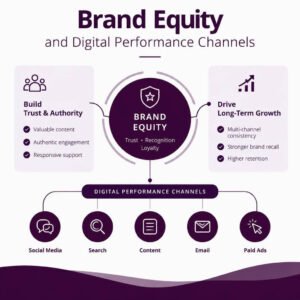
Building Trust and Authority Through Digital Marketing and Branding
Trust is the bedrock of any successful brand-consumer relationship. As statistics reveal that over 81% of consumers require trust before making a purchase, establishing brand credibility is paramount. Digital marketing provides the channels and tools to cultivate this trust and authority. Through consistent, valuable content, transparent communication, and authentic engagement across platforms, brands can shape positive brand perception.
We leverage thought leadership content, engaging social media interactions, and responsive customer service to build a reputation for reliability and expertise. This organic engagement, driven by a well-executed digital strategy, transforms mere visibility into genuine trust, positioning a brand as an authoritative voice in its industry.
Driving Multi-Channel Consistency for Long-Term Growth
The digital landscape is fragmented, with consumers interacting across numerous platforms daily. To capitalize on this, driving multi-channel consistency is non-negotiable for long-term growth. Brands that consistently present themselves across all platforms see a significant 23% increase in revenue, underscoring the power of a unified brand experience.
This means maintaining a cohesive omnichannel messaging strategy, ensuring that the visual identity, tone of voice, and core brand guidelines are uniformly applied across all digital channels—from social media profiles and email campaigns to websites and paid advertisements. Such consistency fosters strong brand recall, reinforces brand values, and builds a predictable, trustworthy experience that leads to greater customer retention and optimized revenue streams over time.
Core Pillars for Enhancing Online Visibility and Market Reach
To truly thrive in the digital age, businesses must focus on enhancing their online visibility and expanding their market reach. This involves strategically optimizing every potential customer touchpoint, ensuring that when consumers search for solutions or discover new brands, yours is prominently featured. We focus on building robust search visibility and inbound reach, transforming passive online presence into active brand discovery.
Search Engine Optimization and Content Strategy
At the heart of enhanced online visibility lies a powerful combination of Search Engine Optimization (SEO) and content strategy. SEO is not just about keywords; it encompasses technical SEO, ensuring your site is crawlable and fast, alongside on-page optimization that aligns with user search intent. Our goal is to improve organic search rankings, making your brand easily discoverable by those actively seeking your products or services.
Complementing SEO, a robust content marketing strategy is essential. High-quality, relevant content—whether blog posts, videos, infographics, or guides—addresses customer pain points, answers their questions, and positions your brand as an industry leader.
This approach generates significant lead generation, with content marketing generating three times more leads than traditional outbound marketing while costing 62% less. By consistently providing value, we attract organic traffic and build a loyal audience, transforming searchers into engaged customers.
Paid Media, Influencer Partnerships, and Scaled Advertising
While organic strategies build long-term authority, paid media offers immediate reach and targeted exposure. We employ strategic paid advertising campaigns across various platforms to boost brand lift and reach specific demographics. This includes search engine marketing (SEM), social media advertising, and display ads, all meticulously optimized for performance.
Beyond traditional paid channels, influencer partnerships have emerged as a powerful tool for audience discovery and brand amplification. By collaborating with influencers whose values align with your brand, we can tap into established communities and generate authentic endorsements. Considering that social media platforms have over 4.9 billion active users globally, providing massive reach for brand awareness campaigns, leveraging these networks through both paid media and strategic partnerships is indispensable.
Whether it’s through a targeted ad campaign on a major social platform or a collaboration with a key opinion leader, scaled advertising efforts, including those on vast platforms for paid social advertising, ensure your brand message reaches the right audience at the right time, driving significant brand awareness and engagement.
Precision Audience Targeting Strategies for Brand Awareness
Achieving brand awareness in a crowded digital space requires more than just casting a wide net; it demands precision. Effective audience segmentation and precision targeting allow us to reach the most receptive consumers, maximizing the impact of every marketing dollar. By leveraging behavioral tracking and continuous campaign optimization, we ensure our messages resonate with those most likely to engage and remember our brand.
Demographic and Geographic Segmentation
Demographic and geographic segmentation are foundational elements of precision targeting. Demographic profiles, which include factors like age, gender, income, and education, allow us to tailor messaging to specific groups. For example, a campaign targeting young professionals will differ significantly from one aimed at retirees.
Similarly, geographic parameters enable us to focus efforts on specific regions, cities, or even neighborhoods, ensuring market relevance and efficient resource allocation. This audience profiling helps us understand who our potential customers are and where they are located, laying the groundwork for more nuanced targeting strategies.
Interest-Based Segmentation and Lookalike Audiences
Moving beyond basic demographics, interest-based segmentation allows us to target individuals based on their hobbies, passions, and online behaviors. This approach ensures that our brand messages appear before audiences already predisposed to our offerings. For instance, a sports apparel brand might target users interested in fitness, running, or outdoor activities.
Even more powerful for expanding brand awareness are lookalike audiences. This advanced targeting method uses existing customer data (seed audiences) to identify new users who share similar characteristics and behaviors. Lookalike modeling allows us to reach a broader, yet highly relevant, upper-funnel audience that mirrors our most valuable customers. By combining multiple targeting options—demographic, interest-based, and lookalike audiences—we maximize both reach and relevance, ensuring our brand awareness campaigns are as effective and efficient as possible.
Here’s a comparison of these key targeting options:
Targeting Option Primary Goal Audience Scale Awareness Impact Cost Efficiency Demographic/Geographic Basic Segmentation Moderate to Large Foundational Good Interest-Based Relevance/Engagement Moderate Targeted Very Good Lookalike Audiences Expansion/Similarity Large (New Prospects) High (Relevant Reach) Excellent (High ROI Potential) Integrating Brand Identity with Data Analytics and AI

In the modern marketing landscape, the fusion of strong brand identity with cutting-edge data analytics and artificial intelligence (AI) is non-negotiable for sustained success. This integration allows us to move beyond intuition, driving data-driven strategy that informs every decision. By leveraging predictive analytics, we can anticipate customer needs, map complex customer journeys, and attribute conversions accurately. Marketing automation, powered by AI, ensures that our brand interactions are timely, personalized, and impactful, leading to deeper engagement and stronger brand loyalty.
Implementing High-Performance Creative Assets and User Experience
A brand’s digital presence is only as strong as its creative assets and the user experience it provides. High-performance creative assets, from compelling visuals to engaging video content, are crucial for visual storytelling that captures attention and communicates brand values instantly. Maintaining brand consistency across all these assets reinforces recognition and builds trust.
Crucially, these assets must be delivered within a seamless user experience. A well-designed website, intuitive navigation, and responsive interfaces are not just about aesthetics; they are critical for conversion design and fostering positive customer engagement. For instance, a thoughtfully crafted website, reflecting creative branding and website design principles, can significantly impact how users perceive and interact with a brand. A well-executed digital strategy is essential for being chosen, not just seen, and a superior user experience is a direct pathway to achieving that goal.
Leveraging AI Automation and Analytics in Digital Marketing and Branding
The true power of integrating brand identity with data lies in leveraging AI automation and advanced analytics. Machine learning algorithms can process vast amounts of data to identify patterns, predict future trends, and personalize customer experiences at scale. This allows for sophisticated AI optimization of campaigns, ensuring that every message, every ad, and every interaction is tailored for maximum impact.
Performance analytics provide real-time insights into campaign effectiveness, allowing for agile adjustments and continuous improvement. AI-driven tools can analyze brand sentiment across social media, track campaign attribution with remarkable precision, and even optimize bidding strategies for paid advertising. By embracing these technologies, we empower brands to make smarter decisions, achieve greater efficiency, and build a more responsive and resilient brand presence in an ever-evolving digital world.
Operationalizing Strategy: The Role of Virtual Specialists in Execution
Developing a brilliant digital marketing and branding strategy is only half the battle; operationalizing it effectively is where real results are forged. This is where virtual specialists become invaluable. They serve as the operational backbone, bridging the gap between high-level strategy and day-to-day execution.
By integrating virtual specialists into our workflow, we enhance operational efficiency, ensure seamless marketing execution, and provide team scalability without the overheads of traditional hiring. This approach optimizes resource allocation and allows core teams to focus on strategic initiatives while ensuring consistent, high-quality delivery across all digital fronts.
Streamlining Campaign Management and Daily Content Distribution
Virtual specialists excel at streamlining the often complex and time-consuming tasks of campaign management and daily content distribution. They can execute digital campaigns, create and curate content, manage ad platforms, and track performance, helping maintain consistency and quality across all channels. This allows for a continuous flow of branded content and ensures that campaigns are launched and monitored effectively.
Their core responsibilities often include:
- Content Scheduling & Publishing: Ensuring consistent posting across social media, blogs, and other platforms.
- Ad Monitoring & Optimization: Daily checks on ad performance, budget allocation, and making necessary adjustments.
- Email Marketing Execution: Drafting, scheduling, and analyzing email campaigns.
- Data Entry & Reporting: Compiling performance metrics into digestible reports.
- Community Management: Engaging with audiences on social media and forums.
- Asset Management: Organizing and maintaining digital brand assets.
By offloading these critical, yet often repetitive, tasks to virtual specialists, businesses can ensure workflow continuity and robust operational support, freeing up internal teams to focus on strategic development and innovation. Virtual specialists can serve as a cost-effective extension of a brand’s marketing team, handling execution and performance tracking with precision.
Cross-Channel Performance Tracking and Continuous Optimization
Beyond execution, virtual specialists play a crucial role in cross-channel performance tracking and continuous optimization. They are adept at monitoring key metrics across various platforms, compiling comprehensive analytics reporting, and identifying areas for improvement. This includes tracking website traffic, social media engagement, ad spend monitoring, and conversion rates.
With their support, we can conduct regular A/B testing, analyze results, and implement agile iterations to refine strategies. This data-driven approach ensures that marketing efforts are constantly improving, maximizing ROI, and adapting to changing market conditions. Their ability to provide consistent oversight and detailed reporting empowers brands to make informed decisions and maintain a competitive edge.
Frequently Asked Questions About Digital Marketing and Branding
Why is digital marketing critical for establishing modern brand awareness?
Digital marketing is critical because it’s where modern consumers discover, research, and engage with brands. With the vast majority of customer journeys starting online, a strong digital presence ensures brand discovery, provides numerous digital touchpoints for interaction, and allows businesses to build market presence and brand authority. It’s no longer about whether your brand is online, but how effectively it leverages digital channels to connect with its audience.
Which audience targeting option is most effective for awareness campaigns?
The most effective audience targeting option for awareness campaigns often depends on the specific goals and the stage of the campaign. For broad reach and identifying new potential customers, lookalike models are highly effective as they expand your audience based on characteristics similar to your existing customer base.
Demographic filters and interest-based targeting are also crucial for ensuring your message reaches relevant groups. Combining these methods—using demographic targeting for foundational segmentation, interest-based for behavioral relevance, and lookalike audiences for scale—typically yields the best results for maximizing relevant audience reach.
How do virtual specialists improve digital marketing execution?
Virtual specialists significantly improve digital marketing execution by providing cost efficiency, ensuring execution consistency, and offering agile campaign management. They handle the day-to-day operational tasks, such as content scheduling, ad monitoring, and data reporting, which frees up internal teams to focus on strategy. This leads to workflow continuity, allowing campaigns to run smoothly and effectively, and provides operational agility to adapt quickly to market changes without increasing fixed overheads.
Conclusion
In October 2026, the convergence of digital marketing and branding is not just a trend but a fundamental requirement for business success. We’ve explored how this strategic synergy builds trust, enhances visibility, and drives growth through precision targeting and innovative technologies like AI and data analytics. The ability to operationalize these strategies effectively, often through the invaluable support of virtual specialists, is what transforms potential into measurable results.
By embracing integrated digital marketing and branding, businesses can achieve brand scalability, ensure long-term ROI, and gain a significant competitive advantage. It’s about creating a sustainable growth trajectory where your brand is not just seen, but chosen, trusted, and remembered in an increasingly digital world.