

Modern brands face a constant challenge. Audiences scroll quickly, and static content often struggles to capture attention. Video helps, but traditional production takes time, creative resources, and editing expertise. Many businesses want a faster way to turn ideas and music into visual narratives.
Recent data shows how important video has become in digital communication. According to a report cited by Forbes, more than 91 percent of businesses use video as a marketing tool, reflecting how essential visual storytelling has become for engagement and brand recall.
Brands are now experimenting with a different approach: the AI music video. With prompt-based tools, businesses can turn a song, campaign theme, or product message into a visual story within minutes. This article explains how the approach works, why it matters for marketing, and how businesses use it to communicate ideas more effectively.
How does an AI music video help brands tell stories?
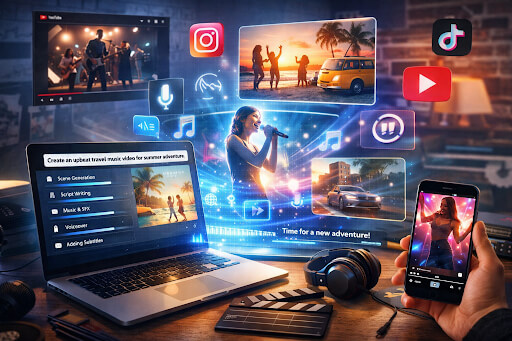
An AI music video allows brands to convert music and concepts into visual narratives without a traditional production workflow. By entering a prompt that describes the theme, mood, and style, the system can generate scenes, transitions, and effects that match the soundtrack.
For brands, this means turning music into storytelling assets that support campaigns, product launches, and digital engagement.
Instead of assembling footage manually, the process usually involves:
- Entering a prompt that describes the campaign or concept
- Specifying the music style, such as upbeat, cinematic, or relaxing
- Selecting a visual tone or format suited to the platform
- Allowing the system to generate scenes, captions, and transitions automatically
This process transforms an idea into a complete visual narrative that can be shared across channels like YouTube, Instagram, and TikTok. It also allows marketing teams to experiment with creative concepts more frequently without long production timelines.
Why are brands using AI music video content?
Businesses increasingly rely on visual storytelling because audiences remember visual information more easily than text. Research summarized on Wikipedia suggests that people process visual content far faster than written information, which helps explain why video marketing continues to grow.
Music videos amplify that effect because sound shapes emotion and pacing. When brands combine audio with visuals, the result can communicate mood, product identity, and narrative in a single format.
Companies are adopting this format for several reasons.
Faster production cycles
Traditional video production may take weeks from planning to final delivery. Automated tools shorten that timeline significantly.
Marketing teams can test multiple creative ideas quickly.
Consistent storytelling
Music provides a rhythm that guides pacing. Visual scenes generated around that rhythm often produce a more cohesive narrative.
Multi-platform publishing
A single music video concept can be adapted for different platforms.
- Short clips for TikTok or Instagram Reels
- Longer videos for YouTube releases
- Promotional snippets for advertisements
This flexibility allows businesses to maintain consistent storytelling across multiple channels.
How does AI generate a music video?
The technology behind an AI music video combines prompt-based generation, audio analysis, and visual synthesis. When a user describes a concept, the system translates those instructions into a structured visual sequence.
The process usually includes several automated steps.
Prompt-based video creation
The user begins by entering a description such as:
- Brand theme or campaign message
- Type of music
- Visual style or tone
The system uses these inputs to generate scenes that align with the music.
Matching visuals to the audio mood
AI analyzes rhythm and tone to align scenes with the soundtrack. Faster beats may produce quicker cuts, while slower music results in longer cinematic shots.
Automatic editing and effects
Transitions, subtitles, visual effects, and sound layers are added automatically. This eliminates the need for manual editing.
For example, a marketing team might create an AI music video for a seasonal campaign using an AI-powered visual content creation suite like invideo, which allows creators to turn prompts into complete visuals and music-driven sequences. In such workflows, an AI generated video can combine scenes, voiceovers, and sound design into a finished piece that communicates the campaign story through music.
Can brands use AI music videos for marketing?
Yes. Many companies already integrate the AI music video format into their marketing strategy. Music naturally communicates emotion, and when paired with visuals, it becomes a storytelling tool.
Brands use these videos in several ways.
Product storytelling
Music-driven visuals can present a product through atmosphere rather than explanation.
Examples include:
- Lifestyle scenes showing product usage
- Cinematic sequences that reflect brand identity
- Short narrative clips linked to a campaign theme
Campaign launches
Music videos can support new product releases or promotional events.
The format works well for digital campaigns because it combines entertainment with messaging.
Social media engagement
Platforms that prioritize video often reward content with strong visual and audio elements.
Brands can publish shorter versions to encourage engagement and sharing.
How do prompts shape the final video?
Prompt writing plays a major role in the outcome of an AI music video. The more clearly a brand describes its concept, the more aligned the generated visuals will be with the intended message.
A prompt typically includes several elements.
Music style
The tone of the soundtrack shapes the video’s pacing.
Examples include:
- upbeat pop music for energetic campaigns
- cinematic orchestral music for dramatic storytelling
- calm ambient music for reflective brand messages
Visual theme
Brands may describe the desired imagery, such as urban nightlife, natural landscapes, or minimalist product scenes.
Audience and platform
Some prompts specify the target platform.
- TikTok or Instagram videos may emphasize short scenes
- YouTube releases may focus on longer storytelling sequences
Clear prompts help transform abstract ideas into structured visual narratives.
How does AI music video creation save time?
Speed is one of the most noticeable advantages. Traditional production involves planning, filming, editing, and post-production.
Automated video generation condenses those steps into a prompt-driven workflow.
Faster creative experimentation
Marketing teams can test several concepts quickly before choosing the final version.
Reduced technical barriers
No advanced editing experience is required.
The system handles:
- scene creation
- transitions
- subtitles
- sound effects
Higher content frequency
Brands can publish music videos more often, which helps maintain audience engagement.
Regular visual content can also support long-term brand recognition across platforms.
What industries benefit from AI music videos?
Although music videos are often associated with entertainment, many industries now experiment with them for storytelling and marketing.
Examples include:
Music labels and artists
Independent musicians use automated tools to release visual content quickly alongside new songs.
Lifestyle brands
Fashion, fitness, and travel companies often rely on atmosphere and emotion in their marketing.
Music videos help convey that identity visually.
Product-based businesses
Companies selling consumer goods can present their products through cinematic storytelling rather than static advertising.
Event organizers
Promotional music videos can introduce festivals, launches, or brand activations.
This variety shows how the AI music video format has expanded beyond traditional music promotion.
Conclusion
An AI music video gives brands a new way to turn sound into visual storytelling. By combining prompts, music, and automated editing, businesses can transform ideas into engaging narratives without complex production workflows.
The approach helps companies produce content more frequently, experiment with creative directions, and communicate emotion through both audio and visuals. As video continues to dominate digital platforms, music-driven storytelling offers a practical way to keep audiences engaged.
For brands that want to connect with audiences through atmosphere and narrative, the AI music video format offers a flexible and efficient creative option.
What type of brand story do you think music could express more powerfully than traditional marketing content?
FAQ
What is an AI music video generator?
An AI music video generator is a tool that automatically creates a music video using a prompt and an audio track. The system analyzes the music and produces matching visuals, transitions, and effects. Users simply describe the concept, and the tool generates scenes that align with the tone of the soundtrack.
Do you need editing skills to create an AI music video?
No. Most systems handle editing automatically. Once a prompt and music style are selected, the software generates scenes, subtitles, transitions, and visual effects. This makes the process accessible for creators, marketers, and businesses that do not have professional video editing experience.
Can businesses use AI music videos for marketing campaigns?
Yes. Many brands use the format for product promotions, event announcements, and social media storytelling. Music-driven visuals often attract attention and communicate mood quickly, which helps campaigns stand out in crowded feeds.
How long does it take to generate a music video with AI?
Depending on the platform and complexity, many tools can generate a complete video within minutes. This speed allows marketing teams to experiment with different creative directions without waiting for long production timelines.
Which platforms are best for sharing AI music videos?
Brands typically share them on platforms that prioritize video content. Popular options include YouTube, Instagram, TikTok, and short-form video platforms. Each platform allows brands to adapt the video length and format to reach different audiences.
Can AI match visuals to the rhythm of a song?
Yes. Many systems analyze the tempo and structure of a soundtrack. Scenes, transitions, and effects are generated in a way that aligns with the rhythm, helping the final video feel synchronized with the music.
Are AI music videos useful for independent musicians?
Independent artists often use these tools to create visual content for song releases. Since the process requires minimal technical knowledge, musicians can focus on creative ideas while the system produces the visual sequence.